


On university-owned property just across Lakeshore Drive from Samford University’s main campus, wetlands, seasonal pools and natural areas along Shades Creek provide habitat for birds, fish, amphibians and other wildlife––a living laboratory for environmental research, restoration and education.
For more than a decade, Samford faculty and students have studied the health of this watershed, evaluated efforts to reduce erosion and worked alongside community partners to protect and restore local habitat. Samford is advancing this strategic effort to create additional wetland habitats, support native species and provide new opportunities for students and the community to learn from the natural environment.
For Betsy Dobbins, director of Samford’s STEM Scholars Program and professor of biological and environmental sciences, the work reflects a fundamental lesson she hopes students carry with them: People are deeply connected to the places in which they live.
“Our health and well-being depend on both human and environmental communities,” Dobbins said. “Misuse of God’s creation affects our spiritual, physical and mental health.”
That connection between people and place has shaped Dobbins’ decades of teaching, research and service at Samford. Her environmental work extends beyond the classroom through longstanding engagement with organizations including Friends of Shades Creek, Black Warrior Riverkeeper and Cahaba River Society.
In recognition of her work with students and on environmental issues, Dobbins served as the inaugural Paul N. Propst Professor of Natural Sciences from 2012-16. Her commitment to teaching and student learning has also earned university-wide and external recognition, including the John H. Buchanan Award for University-wide Excellence in Classroom Teaching in 2008 and selection as Samford’s representative to the Southern Conference Inaugural Faculty Team in 2016.
“Our health and well-being depend on both human and environmental communities. Misuse of God’s creation affects our spiritual, physical and mental health.”
— Betsy Dobbins, professor of biological and environmental sciences
Samford owns property within the Shades Creek area, or flood plain, where portions of the land remain natural or have experienced relatively little human disturbance. These areas provide habitat for birds, mammals, reptiles and amphibians, including the spotted salamanders known for their annual migration in neighboring Homewood.
The wettest portions of the property also serve as nurseries for fish and amphibians. Their proximity to campus provides an outdoor laboratory where students can study ecological systems firsthand and consider what responsible environmental stewardship looks like in practice.
“These less-disturbed areas in Samford’s backyard and next to Homewood High School provide rich opportunities for student projects and hands-on learning,” Dobbins said.
One example is a long-term project evaluating aquatic communities and erosion in Shades Creek. In 2011, Samford placed rock vane structures in the creek to help reduce erosion. Continued monitoring of bank stability and aquatic insect communities provides a way to evaluate the effectiveness of those efforts and identify where additional work may be needed.
Dobbins and Kristin Bakkegard, current Propst Professor of Natural Sciences, later presented research on the efficacy of those rock vanes in reducing local erosion in Shades Creek at the 2014 annual meeting of the Association of Southeastern Biologists.
Bottom-dwelling insects are particularly valuable indicators because they remain in the creek, allowing researchers to use their communities as snapshots of the creek’s health.
“Compiling these snapshots over time can highlight the positive impacts of mitigation efforts and when we need to do more,” Dobbins said.
That work is part of a longer history of engagement with Shades Creek. Dobbins has helped lead community creek cleanups involving Samford students, faculty and local partners, including efforts that bring more than 30 volunteers together to remove trash and preserve the waterway.
Samford’s environmental restoration efforts are now poised to expand through financial support from the university and beyond. The funding will support restoration of native habitat around spotted salamander breeding sites and provide wetland nurseries for other amphibians and fish, according to Dobbins.
“Environmental stewardship is an important expression of Samford’s Christian mission and a key component of our Fidelitas strategic plan,” said Colin Coyne, vice president for finance and business affairs at Samford. “As we seek to faithfully steward God’s resources, we are committed to caring for the natural environments entrusted to us while creating meaningful opportunities for student learning, research and community engagement. We are also grateful for local partners such as Robins & Morton, whose support and shared commitment to this vision are helping expand the impact of this important work.”
Increasing wetland habitat and native vegetation can support a wider range of wildlife while creating opportunities for students to study how ecosystems respond to restoration. Dobbins hopes the project can also serve as a catalyst for continued collaborative environmental work along South Lakeshore Drive.
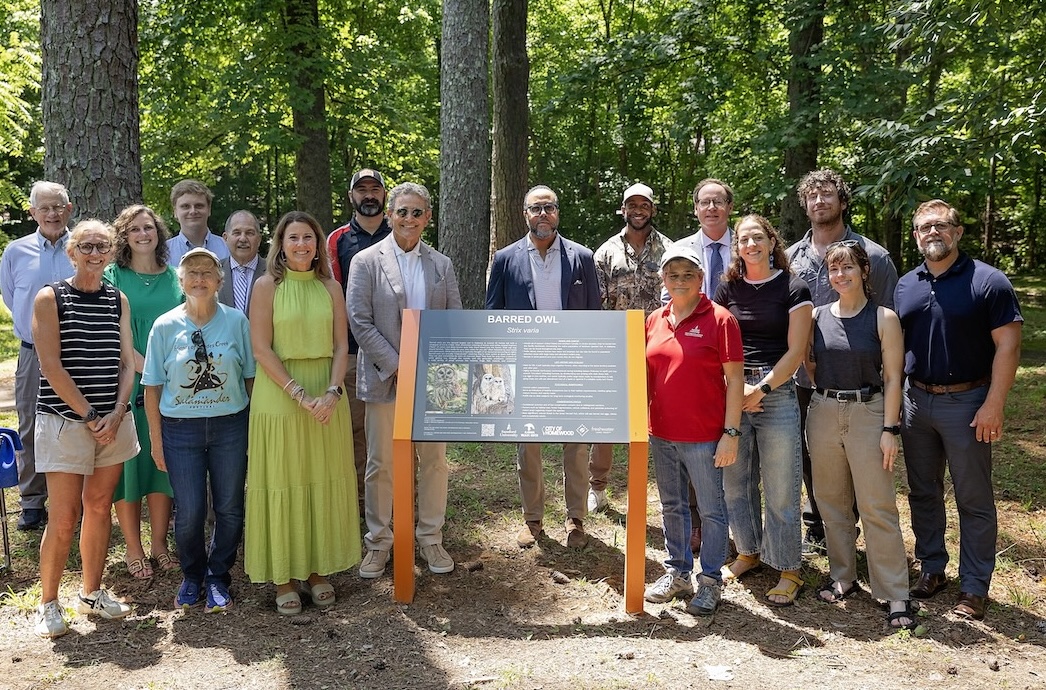
The long-term vision of this project includes possibilities like a boardwalk and observation areas for bird watching, classes, research and recreation, along with additional educational signage and opportunities for guided tours.
Friends of Shades Creek and The Nature Conservancy have been involved in protecting wetland areas along the creek and educating the public about their importance.
“Collaborative efforts, such as land restoration or the Salamander Festival, build community, increase the support base for our local parks and protected places, and broaden educational outreach,” Dobbins said.
The annual Salamander Festival at Homewood High School is one example of that community engagement, bringing together residents, students, environmental organizations, businesses and local government representatives around the seasonal migration of spotted salamanders. The relationship between the salamanders, Shades Creek and development in the area has also received broader attention, including through the short environmental documentary Salabama.
The larger watershed provides important context for Samford’s work. Shades Creek extends about 54 miles and is a tributary of the Cahaba River. Along Samford’s frontage, the creek and surrounding natural areas offer opportunities to study both the effects of historic changes to the landscape and the potential benefits of ecological restoration.
Portions of Shades Creek were straightened years ago, altering how water moves through Shades Valley. A natural creek winds across a valley floor, while a straighter channel can move water more rapidly, accelerating erosion and increasing the potential for flooding when water encounters obstructions.
Wetlands and vernal pools—shallow, seasonal bodies of water—can play an important role in that system. By temporarily holding water during heavy rainfall, they slow its movement into the creek while providing habitat for frogs, salamanders, fish, dragonflies and other species.
“More natural habitats create an area where more plants and animals can live,” Dobbins said.
Restoration also allows Samford students and faculty to document ecological change as it occurs. As wetlands are restored and native vegetation becomes established, researchers can observe changes in plant and animal communities and better understand the benefits these areas provide.
“The changes after pond construction will provide many research and educational opportunities to understand the process of wetland restoration and evaluate the true services that such areas provide to our local economy,” Dobbins said. “The wonderful thing is that we cannot predict many of the benefits we may find.”
For Dobbins, environmental stewardship at Samford extends beyond scientific research. She sees caring for land and water as closely connected to the university’s Christian mission and the biblical responsibility to care for creation.
“In Genesis 1, God creates the lands and waters and each ‘is good,’” Dobbins said. “Humans are given the responsibility to maintain this earth, and that requires maintaining the ecological communities that support the land and water.”
That responsibility also means giving people opportunities to experience the outdoors and recognize the connections between environmental, physical and mental well-being.
For Samford, the natural areas surrounding Shades Creek offer opportunities to put those principles into practice through long-term research, habitat restoration, community partnerships and hands-on education that equips students to better understand and care for the environments in which they live.
“To support the health of the world is to support ourselves,” Dobbins said.
