


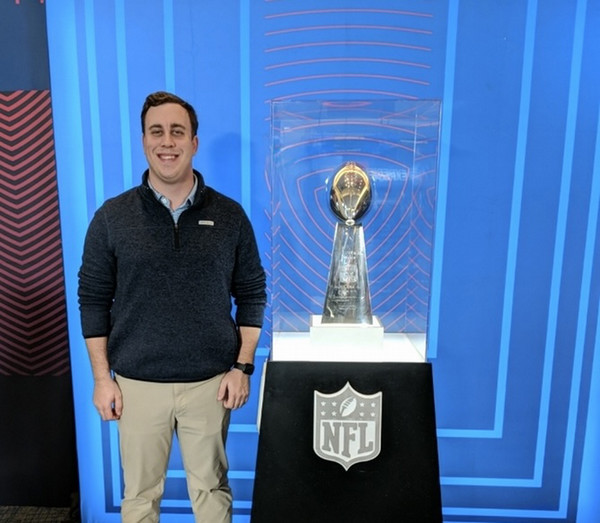
Mason King, a third-year student at Samford University Cumberland School of Law, is spending his final spring semester as a legal extern and marketing/operations assistant with United Athlete Sports. This hands-on role at the intersection of law, athletics and compliance recently took King to the 2026 NFL Combine in Indianapolis, where he supported agents in the player draft and contract process. This experience builds on King’s extensive background in athlete representation throughout his time at Cumberland, which includes analyzing NFL salary cap mechanics at 3XL Sports Management and supporting international and domestic MLB free agent relocations at World Sports Agency.
Can you briefly explain your role as a law student extern with United Athlete Sports?
In my role, I provide comprehensive support to our agents, staff and clients by reviewing and drafting athlete representation agreements and sponsorship contracts. Beyond traditional contract work, I also identify and evaluate brand partnership opportunities to ensure they align with our clients' marketing strategies and legal standards. Additionally, I assist with the strategic recruitment of new player and coach clients to the agency. This dual focus allows me to manage the operational side of sports while ensuring every agreement is legally sound and protective of our clients’ interests.
How has this experience expanded your understanding of how athletics operations work behind the scenes?
This role has provided direct exposure to the complex agent-player contracting process, as well as the NFLPA’s specific, high-stakes agent certification requirements. By attending the 2026 NFL Combine, I gained a deeper understanding of how legal compliance and athlete advocacy function simultaneously during one of the most critical windows of the professional draft cycle. I’ve learned that "behind the scenes" operations are a constant balance of managing high-volume logistics while also maintaining a high level of accuracy and attention to detail. Seeing the coordination required between NFL agents, scouts, and team executives has shown me that successful athlete representation is as much about operational efficiency as it is about legal expertise.
What are some projects or responsibilities you’ve been trusted with during the externship?
During my time in this role, I was trusted to provide hands-on legal and operational support to our agents at the 2026 NFL Combine, which offered a front-row seat to the NFL draft and contract process. This was a truly unique opportunity for me as a law student that very few across the country ever get to experience, and I felt a great sense of humility in being able to participate. That experience felt incredibly remarkable, as I had the privilege of being in the room where multimillion-dollar contract decisions were being made and seeing the culmination of years of hard work for these athletes.
Aside from the Combine, my daily responsibilities include conducting legal research on NIL regulations and compliance requirements across multiple jurisdictions to ensure our NCAA clients remain protected. I am also responsible for reviewing and drafting athlete representation agreements and sponsorship contracts while ensuring all promotional materials comply with established brand guidelines. Additionally, I actively identify and evaluate athlete-brand partnership opportunities to ensure a strategic alignment between our clients’ marketing goals and the corporate identity of various brands.
Which skills from law school have you relied on most in this role?
Throughout this externship, I have leaned heavily on the specialized knowledge gained from my coursework in Professional & Amateur / Olympic Sports Law with Professor Jackson, as well as my coursework in both Intellectual Property Law and Copyright Law with Professor McFarlin. The skills I’ve learned in those courses have been essential in navigating the complexities of player contracts and brand deals. Additionally, the research and advocacy skills I’ve sharpened through experiential coursework in Mediation Advocacy and Negotiation have proven vital in maintaining high-quality relationships with our clients. These courses at Cumberland have provided the practical framework for issue-spotting skills that I use daily, especially when reviewing representation agreements or evaluating the intellectual property implications of a brand sponsorship deal.
How has this work shaped your perspective on compliance and governance in sports?
The work I’ve done so far this spring has reinforced that effective governance is the backbone of the NFL and other major professional sports, requiring deep knowledge of the Collective Bargaining Agreement and league-specific salary cap mechanics. In this role, I’ve been able to see how regulatory frameworks directly impact an athlete’s career. Because of this impact, compliance can be a strategic tool used to create a fair and sustainable environment for athletes to compete. This experience has shown me that a lawyer’s role is to ensure that these rules are followed in a way that maximizes a client’s professional opportunities.
What have you learned about the legal challenges surrounding NIL and student-athlete rights?
My research into NIL has highlighted the significant challenge of navigating a patchwork of compliance requirements that vary drastically across the college sports landscape. Ensuring that student-athletes can maximize their athletic value while staying within the bounds of these evolving regulations requires constant attention and precise contract drafting. I’ve learned that the current legal landscape places a heavy burden and expectation on athletes to remain compliant, which makes legal counsel in the sports world more important than ever before. Overall, NIL has become a rapidly changing field in recent years that demands both legal precision and a deep understanding of the collegiate athletic environment.
What professional strengths have you discovered or strengthened through this experience?
Throughout this experience, I’ve discovered an ability to maintain a calm, analytical mindset while navigating the high-pressure environment of the NFL draft cycle. Attending the NFL Combine was a pivotal moment where I was able to strengthen my ability to provide real-time support to agents, ensuring that every detail was accounted for in a fast-paced setting. I have also refined my ability to translate complex legal issues into clear, actionable strategies that help our clients maximize their opportunities without compromising their eligibility. Most importantly, I’ve gained confidence in my ability to build and maintain the trust of elite athletes and coaches, realizing that my background as a former player allows me to approach advocacy with a level of relatability that is essential in this industry.
How has your background as a collegiate baseball player influenced the way you approach sports law and athlete advocacy?
Having stood on the field as a student-athlete, I have a firsthand understanding of the immense dedication required to compete at a high level and the unique pressures athletes face. I feel like my personal experience allows me to approach legal advocacy with a level of relatability that clients appreciate. I don’t just see a contract, I see the years of hard work that led to that opportunity. My athletic background has instilled a "teammate" mindset in my professional life, where my goal is to provide clients with the same level of support and protection that I would have wanted for myself.
How has this experience influenced your career goals after law school?
This experience has solidified my commitment to a career in the sports industry. By combining my Cumberland School of Law education with my background in both NFL and MLB agency operations, I feel like I am prepared to navigate the legal complexities of professional sports. Following my graduation in May, I plan to transition into a full-time role within the sports industry, with the goal of using my perspective as a former Division III baseball player and a lawyer to bridge the gap between athletes and the business of sports.
As you prepare to graduate and sit for the Kentucky Bar Exam this July, how do you feel Cumberland has uniquely prepared you for this specialized field?
Cumberland’s emphasis on lawyering skills and practical advocacy has been a total game-changer for me. Whether it was navigating complex fact patterns and legal issues in class or drafting brand partnership contracts outside of class, Cumberland’s curriculum is designed to produce practice-ready attorneys who can hit the ground running. I feel incredibly prepared to take the Kentucky Bar Exam this summer and begin my legal career. I believe that Cumberland didn't just teach me the law, but also how to apply it in high-pressure, real-world environments. I’m excited to take the skills that I’ve learned at Cumberland and apply them to the next chapter of my career.
What’s one takeaway from this internship that will stay with you throughout your legal career?
My biggest takeaway is that the strength of a lawyer is rooted in the depth of their relationships with clients. Whether working with a prospect at the NFL Combine or a veteran in free agency, I’ve learned that you cannot effectively protect your clients’ interests without first understanding their unique personal and professional goals. Breaking into the sports law industry is notoriously difficult, and I am incredibly grateful for the professionals and mentors who recognized my drive and provided me with these various opportunities throughout my time at Cumberland. This externship has taught me that a lawyer is most effective when they are a trusted partner, and I look forward to the day when the roles are reversed so I can provide the same mentorship and opportunity to a future law student.
