


Department
Geography & Sociology
Preparing Students to Understand and Meet the World
Geography
Samford's geography program explores the places, patterns and landscapes that shape our world. Students study how people interact with their environments and how geography influences communities, cultures and global issues.
Through coursework and hands-on learning, students build skills in geographic information systems (GIS) and other mapping technologies. These skills prepare graduates to address challenges related to globalization, environmental change and the growing use of geographic data across many industries. Learn More
Most people who are ultimately attracted to the discipline of geography are motivated by much larger aspirations than good salaries. The opportunity to make a difference in the world, in whatever expression that takes, is one of the most frequently cited reasons why current geography students, researchers, and practitioners explain their career choice.
At least three recent global trends can be identified as contributing to a renaissance of geography and its potential for making a difference in society and the world:
- Globalization at an increasing pace and scale phenomenon that compel a greater understanding of the world, places, people, and natural systems that affect us as a planet and as global citizens.
- Expansion of geographic technologies, once fairly obscure and now pervasive in our daily lives, such as GPS in cell phones and cars, online mapping at your fingertips, cable news reports using spatial visualizations, and many more applications in modern business and government services.
- An academic trend toward greater interdisciplinarity, especially a renewed focus on big questions that matter but that require a breadth of knowledge and multiple fields to tackle. Geography’s long-standing intellectual traditions in crossing those usual disciplinary boundaries are now better understood, increasingly seen as relevant and more widely respected in scholarly circles.

"Long before I knew my own strengths, my professors took a vested interest in my passions and challenged me to go beyond the textbook. They taught me that being a geographer was more than being a walking atlas, but being able to recognize the complexities of the world around us, and to always be curious."—Meghan McCollum, 2013 U.S. Rotary Global Scholar
Sociology
Samford's sociology program helps students understand how people, communities and societies interact. Students build research, critical thinking and communication skills that prepare them for careers in health care, social work, public policy, law enforcement and other fields.
Through engaging courses, research opportunities and personal faculty mentoring, students gain practical experience and prepare for their careers. Samford also offers a fast-track option that allows students to earn a bachelor's degree in sociology and a master's degree in social work in just five years.
Learn More
Students are prepared to enter careers with critical analytic skills giving them insight and competence. Graduates have been admitted to post-graduate programs in numerous regional state universities, including Alabama, Florida, Georgia, and private and public universities, such as the University of Chicago, Vanderbilt University, and the University of California at Los Angeles.
Sociology majors are eligible to participate in a fast-track option that allows students to graduate with a bachelor’s degree in sociology and a master’s degree in social work after five years of study. Students then enroll in Master of Social Work (M.S.W.) courses during their senior year of undergraduate studies; the M.S.W. courses they complete during that year also satisfy general and directed undergraduate elective requirements, allowing students to graduate with a bachelor’s degree after four years of study. A final year of graduate coursework leads to completing the M.S.W. degree, allowing students to earn both a bachelor’s and a master’s degree in five years. Participation in this program requires careful advisement and scheduling and permission from the undergraduate department chair and the M.S.W. program director.
Social Work is an excellent career choice for Sociology majors, as both disciplines utilize similar theories, research strategies, and practice methods. The Samford University M.S.W. program is a distinctively Christian learning community that prepares graduates for lives of service as advanced social workers who promote healing, wholeness, and reconciliation. The program offers Clinical Social Work and Global Community Development concentrations and prepares graduates to serve in clinical, medical, and hospice social work; human services administration; child welfare; community organizing; and international relief.
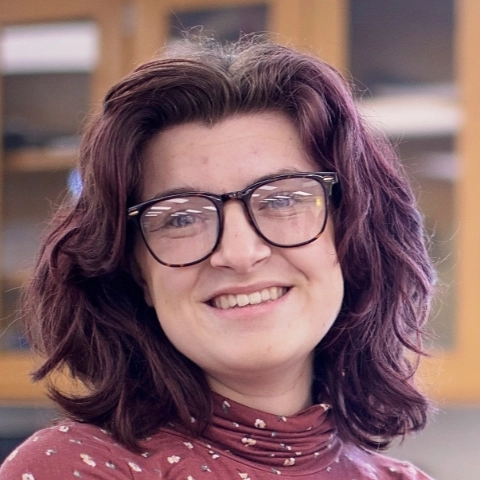
"I am equipped to navigate any job or position that requires networking, critical thinking and interacting with diverse perspectives because of the Department of Sociology. They are always offering opportunities for internships and events that cater to our interests in the topics we discuss, and the faculty does all they can to ensure we're safe and respected while discussing hard subjects."—Katy Ann Caldwell, Sociology Major, Race Ethnicity and Social Justice Minor
Academic Programs
Undergraduate Majors
Geography
Samford's Geography major explores the places, landscapes and patterns that shape our world. Students study the relationships between people and their environments while learning to address global challenges.
Through coursework and hands-on experience with geographic information systems (GIS) and other mapping technologies, students develop skills for careers in environmental science, urban planning, government, business and related fields.
Learn More
Geography with GIS Certificate
The Geography major with GIS Certificate combines geographic studies with advanced training in geographic information systems (GIS). Students learn to collect, analyze and map geographic data using modern technology.
The program includes advanced geospatial courses and a GIS certificate that highlights students' technical skills. These skills can support careers in environmental science, urban planning, public health, business and other fields.
Learn More
Sociology
Samford's Sociology major explores how people interact and how societies function. Students study social relationships, institutions and challenges while building skills in research, communication and critical thinking.
Graduates are prepared for careers in health care, social work, public policy, law enforcement, industrial relations and other fields. Students can also pursue a fast-track option to earn a bachelor's degree in sociology and a master's degree in social work in five years.
Learn More
Undergraduate Minors
Sociology
The Sociology minor helps students understand social relationships, communities and institutions. It complements majors in health care, business, social work, geography, political science, religion and journalism.
Learn More
Environmental Studies
The Environmental Studies minor explores the relationship between people and the environment. Students study natural and built environments while examining how politics, economics, science, history, ethics and philosophy shape human behavior.
The program also includes a summer field-based course that allows students to apply their knowledge outside the classroom.
Learn More
Race, Ethnicity and Social Justice
The Race, Ethnicity and Social Justice minor explores the history, cultures and experiences of racial, ethnic and historically marginalized groups. Students examine the social and political factors that shape these communities.
Through courses from several academic fields, students develop a deeper understanding of different perspectives and learn to approach others with respect, fairness and empathy.
Learn More
Geography
The Geography minor explores the places, landscapes and patterns that shape our world. Students gain a better understanding of how people and environments interact.
The minor complements majors in business, history, sociology, political science, mathematics, computer science, journalism, government, public health, world languages, missions and religion.
Learn More
Undergraduate Certificate
Geographic Information Systems (GIS) Certificate
The undergraduate GIS Certificate helps students from any major build skills in geographic information systems, a technology used to collect, analyze and map location-based data.
Through hands-on courses, students learn spatial analysis, data visualization and digital mapping. These skills can be applied in fields such as public health, environmental science, urban planning and business.
The certificate strengthens students' technical skills and prepares them for careers that use geographic data.
Graduate Certificate
Geographic Information Systems
The fully online, 12-credit-hour Graduate Certificate in Geographic Information Systems (GIS) helps students develop skills in collecting, analyzing, mapping and presenting geographic data.
Offered through the Department of Biological and Environmental Sciences' graduate program in Environmental Health, Policy, and Management, the certificate focuses on using GIS technology to study environmental issues and support informed decisions.
Geography & Sociology Scholarships
William Samuel Tynes Scholarship
The William Samuel Tynes Scholarship honors Samford geography alumnus William Samuel Tynes, who died in 2003. Tynes served as a GIS specialist in the U.S. Army's 320th Engineering Topographic G2 Terrain Company during Operation Iraqi Freedom.
Awarded annually, the scholarship supports geography majors in good academic standing who demonstrate exceptional service and dedication to Samford's geography program. It honors Tynes' life, perseverance and commitment to service.
