


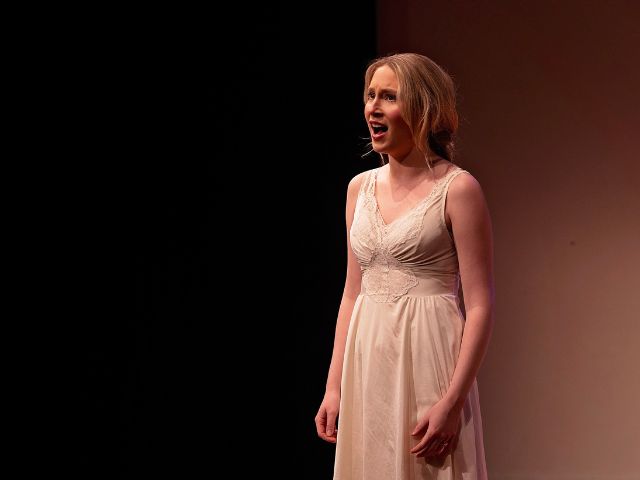
This spring, as I Pagliacci and Cavalleria Rusticana come to life on a Birmingham stage, Samford University School of the Arts will be widely represented—bringing an exceptional number of students, faculty and alumni into these professional opera productions.
Through a partnership with Opera Birmingham, 15 undergraduate and graduate students are participating in the production, all as members of the ensemble, with several performing named, supporting roles. The cast includes six Samford alumni—some returning to Birmingham to sing major roles years after graduating—creating a powerful through‑line from student training to professional success.
For professor Kristin Kenning, director of Samford Opera and stage director for Opera Birmingham, the scale of student involvement reflects the strength and intentional design of the university’s vocal program.
“Samford University has always had a vibrant, rigorous vocal program,” Kenning said. “From our award‑winning choral and opera ensembles to the individual care students receive in their voice training, Samford leads the way in preparing young artists for careers as performers. I’m delighted that so many current and former vocal students are performing with Opera Birmingham this spring.”
Professional expectations, real‑world experience
Unlike traditional academic opera productions, professional companies operate on shorter rehearsal timelines and expect singers to arrive fully prepared.
“At Samford, there should be very little change between a university rehearsal and a professional one,” Kenning said. “Part of our training is holding students to professional‑level expectations long before they step into the industry.”
That preparation is now paying off.
Liv Sand, a first‑year graduate student, portrays the role of Lola in Cavalleria Rusticana, a milestone that came sooner than she ever imagined.
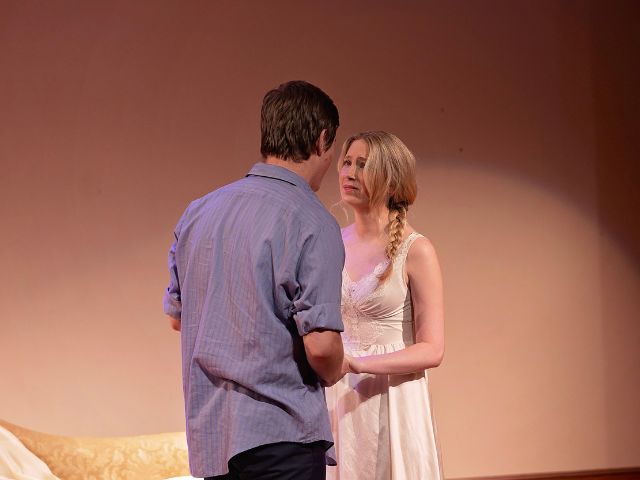 “I remember watching Cavalleria Rusticana last year and thinking, ‘That’s a role I could sing one day,’” Sand said. “Little did I know it would become my first professional role just a year later.”
For Sand, taking on the role at 22 has been thrilling and demanding.
“Stepping into a professional opera role so early is exhilarating and daunting,” she said. “But I’m confident because of the training I’ve received at Samford—especially the emphasis on preparation, language study and performance practice.”
Samford senior Willian da Silva portrays Silvio in I Pagliacci, a pivotal bridge between academic training and the professional stage.
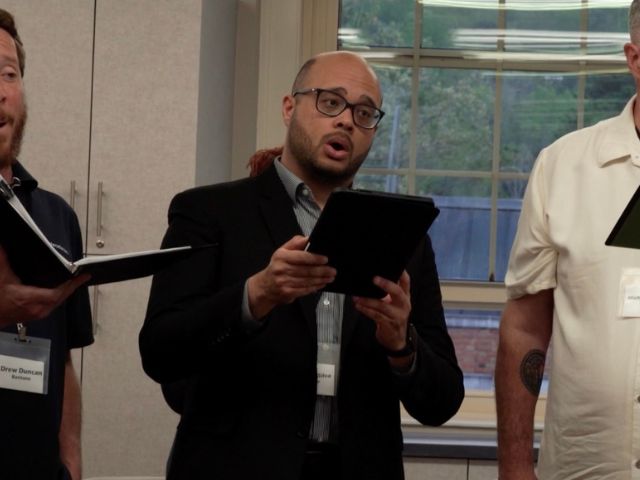 “Performing a named role in a fully professional production as an undergraduate is an honor and a significant responsibility,” da Silva said. “It challenges me to rise to professional standards while still in training, helping bridge the gap between student and emerging artist.”
Da Silva said Samford’s program has prepared him vocally and artistically.
“The program has given me a strong technical foundation and a deeper understanding of storytelling and character development,” he said. “Silvio’s music requires a warm, lyrical line, but at the same time, the intensity of the drama is incredibly high. Learning how to fully commit to his urgency and sincerity without letting that intensity disrupt the vocal line has been a really important part of the process.”
Sharing the stage with professionals and alumni reinforces his career goals.
“This experience has solidified my desire to pursue opera professionally after graduation,” da Silva said. “Working alongside experienced artists makes the expectations of the field very clear—and motivates me to keep growing.”
Learning from alumni and professionals
The production provides daily exposure to artists who previously navigated the transition from student to professional.
“It’s inspiring to be around people who share such a deep love for opera,” da Silva said. “We talk about productions we’ve seen, how different experiences shaped us, and what the profession really demands. That kind of environment is educational and personally meaningful.”
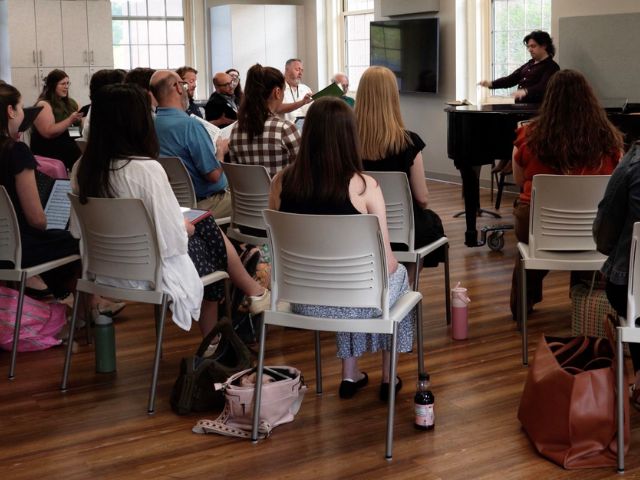 Kenning said that access plays an important role.
“Working alongside alumni and seasoned professionals allows students to imagine their own futures,” she said. “It shows them what success can look like while they are still developing their craft.”
Behind the scenes: professional design and collaboration
Samford’s involvement extends offstage. Mary Gurney, assistant professor of costume and instructional design, is the costume designer for the productions. She designs with artistry and function in mind—while offering students a firsthand look at professional production standards.
“Singers are the instruments,” Gurney said. “Costumes must support breath, movement and comfort, while also communicating character and emotion.”
Costume design students observe the entire design process, from research and fittings to revisions and final execution. Because these productions mirror the realities graduates will face, they make the transition from school to the professional world much smoother.
“They see how professional designers collaborate with directors and performers, and how ideas evolve under real constraints,” Gurney said. “Those problem‑solving skills are essential for careers in the arts.
“Students learn how to meet deadlines, adapt to change and collaborate across disciplines.”
Strengthening Birmingham arts
Faculty agree the benefits extend beyond Samford.
“This partnership elevates artistic training while enriching Birmingham’s cultural landscape,” Gurney said. “It’s a true collaboration—students gain mentorship and experience, while the production gains fresh energy and talent.”
Kenning said Samford’s strong reputation within the Birmingham arts community drives for partnerships “that allow students to contribute meaningfully while they learn.”
Joel Davis, chair of the Division of Music in the School of the Arts, reflected on the program’s legacy and the generational continuity that defines Samford Opera.
“Samford Opera reflects a long tradition of artistic excellence that spans generations of students, faculty and alumni,” Davis said. “Internationally recognized artists such as Elizabeth Futral, Gran Wilson, John Hoomes and Susan Patterson all began their journeys within Samford’s opera program, establishing a legacy that continues to shape the School of the Arts today.”
That legacy continues through the School of the Arts’ partnership with Opera Birmingham, where Samford students carry forward a tradition of excellence while gaining professional experience..
“I hope the audience sees how dedicated Samford students are to this art form,” Sand said. “And I hope it inspires young people to explore opera and consider what’s possible through this kind of training.”
